Best Paper Award · ICRTC-2026
Anatomy of Decoder-Only LLM Failure in Low-Resource Machine Translation
Tokenizer Fertility, Data Thresholds, and Decoding Strategies for Kashmiri
Best Paper Award
ICRTC2026
Best Paper Award
This work received the Best Paper Award at the 14th International Conference on Recent Trends in Computing (ICRTC-2026), organised by the Department of Computer Science and Engineering, SRM Institute of Science and Technology, Delhi-NCR Campus, in association with Springer.
- Venue
- ICRTC-2026, SRM IST Delhi-NCR, Ghaziabad, India
- Dates
- 3–4 July 2026
- Proceedings
- Springer
- Award
- Certificate of Appreciation (Best Paper)
This paper investigates Kashmiri→English machine translation, comparing a QLoRA-adapted Mistral-7B against NLLB-200 and IndicTrans2 on a 124,102-pair parallel corpus. The gap is stark — NLLB-200 reaches 31.57 BLEU against Mistral’s 13.89 — but the more instructive finding is why. We provide the first quantified tokenizer fertility analysis for Kashmiri (4.06× more tokens per word than English), trace the remaining gap to systematic over-generation, and show that a deployable source-constrained decoding strategy recovers +12.75 BLEU without touching the model weights.
Four core contributions
Tokenizer fertility analysis
The first quantified analysis for Kashmiri. Mistral’s BPE tokenizer needs 4.06× more tokens per Kashmiri word than per English word (5.89 vs. 1.45) — identified as the upstream root cause of failure. NLLB-200’s SentencePiece reaches near-parity at 2.50 vs. 1.40.
Cross-lingual transfer threshold
A sharp phase transition at roughly 30K pairs: a 4.2× data increase yields a 29.9× BLEU gain. Not gradual learning — a structural threshold below which decoder-only transfer to a non-Latin script simply does not form.
Decoding failures, and a fix
Five failure modes identified. An oracle experiment proves the problem is decoding, not knowledge (+7.85 BLEU from truncation alone); a deployable source-constrained strategy achieves +12.75 BLEU with no retraining.
Human evaluation platform
An evaluation tool built for Kashmiri MT — blinded pairwise assessment, word-level visual diffing, anti-rushing telemetry, and inter-annotator agreement tracking. It is the site you are reading.
1. The corpus
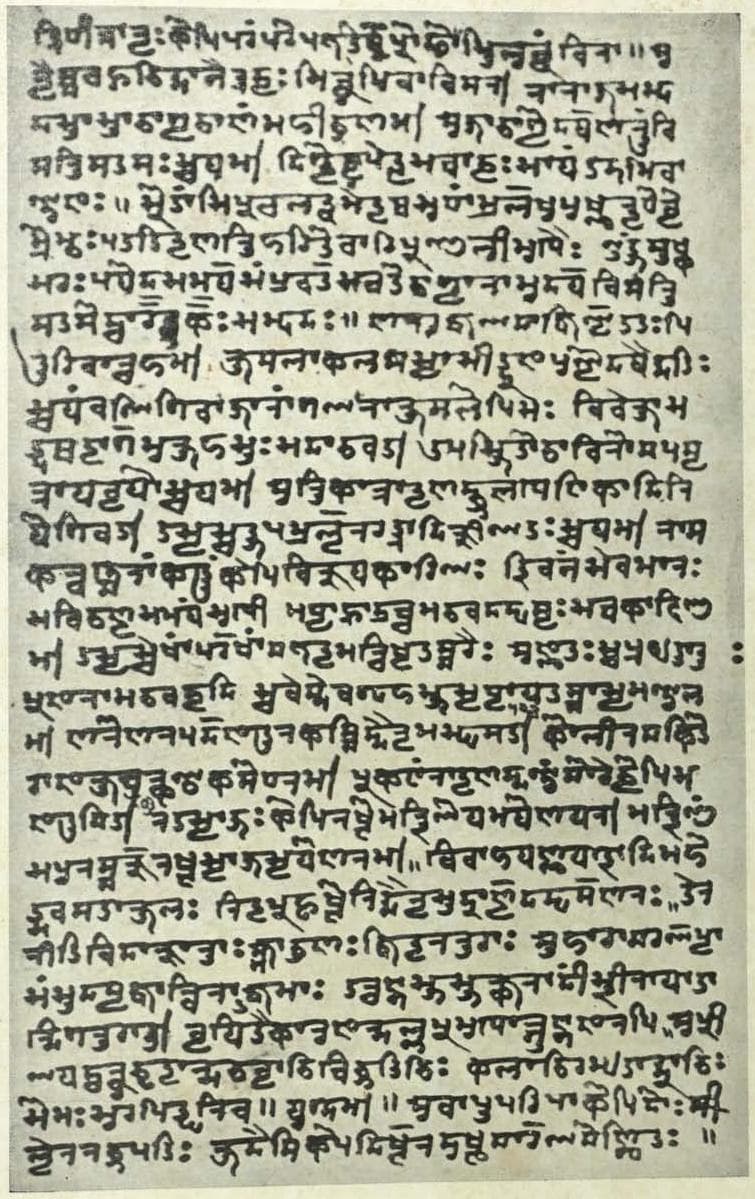
Getting a usable Kashmiri parallel corpus is harder than it sounds. We aggregate 124,102 pairs from two public repositories and apply a four-stage reproducible filtering pipeline.
| Source | Pairs | Content |
|---|---|---|
| AI4Bharat BPCC (kas_Arab) | 98,923 | Web-crawled news and government text |
| SMUQamar | 26,182 | Colloquial and educational content |
- Deduplication and length — exact-match dedup, then a 10–500 character filter per side
- Script verification — Arabic Unicode character ratio ≥ 0.2, removing Latin-script misclassifications and code-switched fragments
- Semantic alignment — cosine similarity ≥ 0.4 between
paraphrase-multilingual-MiniLM-L12-v2embeddings, discarding content-misaligned rows - Split — 95/5 into 117,896 training and 6,206 evaluation sentences
2. Results
Translation quality across three systems
| Metric | Mistral-7B (QLoRA, 125K) | NLLB-200 | IndicTrans2 |
|---|---|---|---|
| BLEU ↑ | 13.89 | 31.57 | 52.88 |
| chrF ↑ | 45.79 | 56.58 | 73.01 |
| TER ↓ | 138.17 | 55.45 | 37.21 |
| METEOR ↑ | 47.74 | 58.57 | 71.85 |
| BERTScore F1 ↑ | — | — | 95.47 |
| ROUGE-1 ↑ | 43.28 | 61.84 | 73.85 |
| ROUGE-2 ↑ | 25.10 | 39.33 | 57.85 |
| ROUGE-L ↑ | 39.37 | 57.57 | 70.85 |
IndicTrans2’s numbers should be read as a performance ceiling rather than a fair zero-shot result: because the corpus draws on BPCC data, there is likely overlap with its pre-training set. BERTScore was computed only for the top-performing model, due to GPU memory constraints on the evaluation hardware.
The minimum data threshold
The most striking result appears when training data is reduced to the 30K subset. BLEU collapses from 13.89 to 0.46 — not a gradual decline, but near-total failure. A 4.2× data increase then produces a 29.9× BLEU gain, a shape that looks far more like a phase transition than a learning curve. We term this the cross-lingual transfer threshold.
| Configuration | BLEU | ROUGE-1 | ROUGE-L |
|---|---|---|---|
| 125K pairs (mixed sources) | 13.89 | 43.28 | 39.37 |
| 30K pairs (single source) | 0.46 | 13.52 | 11.16 |
| Ratio (125K / 30K) | 29.9× | 3.2× | 3.5× |
Decoding is the highest-leverage intervention
An oracle experiment — truncating Mistral’s outputs to 1.2× the reference word count, changing nothing about the model — lifts BLEU from 13.89 to 21.74, closing 44% of the gap to NLLB-200. The correct translation is already in the output; the model simply does not know when to stop. This is a decoding problem, not a knowledge problem.
The oracle needs reference lengths, so it is not deployable. A source-constrained strategy — cap generation at 2× the source word count with a 1.3 repetition penalty — captures the same upside without them.
| Strategy (n=500, beam=4) | BLEU | chrF | Over-gen % | Degen % |
|---|---|---|---|---|
| Baseline (beam=4) | 3.75 | 30.95 | 97.0 | 54.0 |
| Length-penalty (α = 0.6) | 3.99 | 32.04 | 95.8 | 53.8 |
| Source-constrained (2× + rep. penalty) | 16.50 | 47.21 | 39.2 | 33.0 |
The baseline BLEU here (3.75) differs from Table 1 (13.89) because the inference configuration and the failure-heavy sentence subset differ; the relative gain is the meaningful number. The lesson: gentle penalties fail, hard length constraints work.
3. Why it fails: five failure modes
500 translations were manually reviewed and their errors traced to five recurring mechanisms.
- Over-generation (hallucination) — 66% of outputs run past 1.5× the reference word count. The average prediction/reference ratio is 2.2×, against 1.0× for NLLB-200. The model translates correctly, then keeps going.
- Tokenizer fragmentation — 5.89 tokens per Kashmiri word against 1.45 for English. The context window fills with source-encoding overhead, and morphemes get split arbitrarily across subword boundaries.
- Repetition loops — 47.2% of outputs show some degeneracy. The most characteristic is numeric sequence overflow: a plausible translation prefix, then counting forever. Pure word repetition accounts for 12.2%.
- Source copying — Kashmiri characters carried through into the English output, a sign the language transfer never fully triggered.
- Semantic drift — fluent English bearing little relation to the source. A grounding failure rather than a fluency one.
Contrastive analysis: where the gap actually lives
| Outcome category (n=500) | Count | % |
|---|---|---|
| Both succeed (BLEU ≥ 30) | 63 | 12.6% |
| NLLB-only success (NLLB ≥ 30, Mistral < 15) | 79 | 15.8% |
| Both fail (BLEU < 15) | 163 | 32.6% |
| Mistral-only success (Mistral ≥ 30, NLLB < 15) | 6 | 1.2% |
On the 15.8% of sentences where NLLB wins outright, its average BLEU is 47.7 against Mistral’s 7.6. These are not randomly distributed — they are the morphologically complex inputs that expose tokenizer fragmentation most sharply, supporting it as the upstream root cause.
What this means for other languages
All three mechanisms are structural rather than Kashmiri-specific. Arabic, Thai, Amharic, and Tigrinya show analogous fertility patterns. Three concrete lessons for practitioners on other non-Latin low-resource pairs: fix the tokenizer first — a joint SentencePiece vocabulary is the highest-return preprocessing investment; constrain generation length — even a hard cap on source word count recovers substantial quality without retraining; and treat 30K pairs as a floor, below which QLoRA fine-tuning should not be expected to produce useful translations.
4. Experimental setup
- Task
- Kashmiri→English neural machine translation
- Experimental model
- Mistral-7B-Instruct-v0.2 + QLoRA — 4-bit NF4 with double quantisation, LoRA r=16, α=16, dropout 0.1, on q/k/v/o_proj and gate_proj (~23M trainable parameters)
- Training
- Paged AdamW 32-bit, lr 1×10⁻⁴, 1,000 steps, effective batch 8, fp16 — dual NVIDIA T4 (Kaggle, 16GB × 2), ~4 hours
- Baseline 1
- facebook/nllb-200-distilled-600M — 600M encoder-decoder, evaluated zero-shot
- Baseline 2
- indictrans2-indic-en-1B — 1B encoder-decoder, zero-shot with IndicTransToolkit preprocessing and 5-beam search
- Ablation
- Same base model on the 26,182-pair SMUQamar subset (attention-only target modules, α=32)
- Metrics
- BLEU, chrF, TER, METEOR, BERTScore, ROUGE-1/2/L, plus blinded human adequacy-fluency assessment
- Infrastructure
- Custom human-in-the-loop evaluation platform (Next.js + Supabase)
5. The human evaluation platform
Automated metrics rarely capture translation quality fully, and the disconnect widens for morphologically rich languages. This platform is built specifically to evaluate Kashmiri machine translation. Evaluators rate two anonymised systems on:
- Adequacy (1–5) — how much meaning from the source is preserved
- Fluency (1–5) — how natural and grammatical the translation reads
- Overall preference — which system produced the better translation
Design choices that protect annotation quality
- Word-level visual diffing — when two translations are close, differing words are highlighted automatically, lowering the cognitive cost of spotting small differences
- Full blinding and randomisation — model identities are hidden and side assignment is re-randomised for every sentence, so neither model nor screen position can bias a rating
- Anti-rushing telemetry — time spent per judgement is recorded, so implausibly fast responses can be filtered in post-processing
- Keyboard interface — number keys for the 1–5 scales and arrow keys for preference, letting frequent raters move quickly without losing accuracy
Early results
Across 123 blinded side-by-side comparisons, reviewers rated System A 3.88/5 for adequacy and 3.72/5 for fluency, and System B 3.63/5 and 3.41/5. On overall preference, native Kashmiri speakers chose System A 36.6% of the time, System B 32.5%, and a tie 30.9%. Inter-annotator agreement is tracked with Cohen’s weighted κ and pairwise preferences tested with the Wilcoxon signed-rank test. These figures are a baseline yardstick as more judgements accumulate.
6. Limitations
- The BPCC web-crawled corpus likely retains residual noise the filtering pipeline did not remove, introducing some ambiguity into absolute metric scores.
- Only the Kashmiri→English direction was studied; the reverse direction may behave differently.
- Compute constraints (dual T4, Kaggle quota) prevented a thorough sweep over learning rates, epochs, and LoRA ranks.
- Human evaluation data is still being collected, so the study leans on automated metrics as a proxy for human judgement.
- IndicTrans2’s 52.88 BLEU is best treated as an upper bound, given likely test-set contamination from BPCC pre-training.
- The mechanistic claims are Kashmiri-specific; replication on Amharic, Uyghur, or another Perso-Arabic pair is needed before generalising.
Future work
A custom Kashmiri SentencePiece tokenizer; extended multi-epoch training beyond the 1,000-step cap; empirical comparison of beam search with coverage penalties against constrained decoding; bidirectional English→Kashmiri evaluation; and replication of the data threshold on other Perso-Arabic pairs.
Cite this work
Ayoub, F., and Tigga, N. P. (2026). Anatomy of Decoder-Only LLM Failure in Low-Resource Machine Translation: Tokenizer Fertility, Data Thresholds, and Decoding Strategies for Kashmiri. In Proceedings of the 14th International Conference on Recent Trends in Computing (ICRTC-2026). Springer. Best Paper Award.
@inproceedings{ayoub2026anatomy,
  title     = {Anatomy of Decoder-Only LLM Failure in Low-Resource Machine
               Translation: Tokenizer Fertility, Data Thresholds, and
               Decoding Strategies for Kashmiri},
  author    = {Ayoub, Faizan and Tigga, Neha Prerna},
  booktitle = {Proceedings of the 14th International Conference on Recent
               Trends in Computing (ICRTC-2026)},
  publisher = {Springer},
  year      = {2026},
  note      = {Best Paper Award}
}Contact
Questions, collaboration, data access
For enquiries about this research, collaboration, or access to the corpus and training pipelines, write to us.
faizan@kashmirairesearch.online
Faizan Ayoub, lead researcher, Kashmir AI Research